
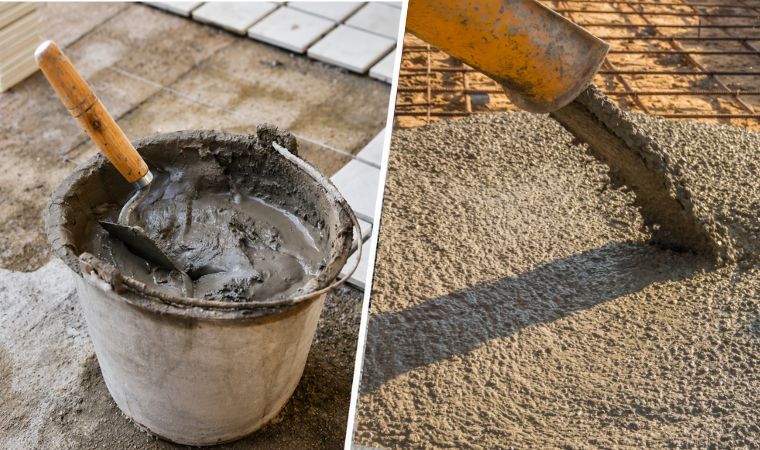
Choosing the right concrete solution is one of the most important decisions in any construction project. Whether you’re constructing a residential building, commercial complex, industrial facility, or infrastructure project, selecting the appropriate material directly impacts strength, durability, construction speed, and overall project cost.
Two commonly used solutions are Bucket Concrete and Dry Concrete Mix. While both are used in modern construction, they serve different purposes and are suitable for different applications. Understanding their properties, advantages, and limitations helps contractors, engineers, and builders make informed decisions.
In addition to these materials, products such as Back Concrete, Silicon Concrete for Bases and Mortar Beds, and high-performance Construction Chemicals further improve structural performance and durability.
This guide explains the key differences between Bucket Concrete and Dry Concrete Mix, helping you determine which solution is best for your project.
Quick Answer
Bucket Concrete is ready-to-place concrete transported and poured using crane buckets or lifting equipment, making it ideal for high-rise and large-scale construction. Dry Concrete Mix is a factory-prepared blend of cement, sand, and aggregates that requires water before use and is best suited for repairs, small projects, and controlled on-site applications.
What is Bucket Concrete?
Bucket Concrete refers to ready-mixed concrete that is transported and placed using specially designed concrete buckets attached to cranes or lifting equipment. This method is widely used on construction sites where concrete pumps are impractical or access is limited.
Because the concrete is produced under controlled batching conditions, it provides consistent quality, reliable strength, and excellent workability. The bucket system allows accurate placement of concrete in difficult-to-reach locations, reducing wastage and improving construction efficiency.
Bucket Concrete is commonly used in:
- High-rise residential towers
- Commercial buildings
- Industrial plants
- Bridge construction
- Infrastructure projects
- Heavy reinforced concrete structures
What is Dry Concrete Mix?
Dry Concrete Mix is a pre-blended mixture of cement, graded aggregates, and sand supplied in dry form. Unlike ready-mixed concrete, water is added at the construction site according to the manufacturer’s recommendations.
Dry Concrete Mix is suitable for:
- Minor repair works
- Patch repairs
- Pavements
- Footpaths
- Small foundations
- DIY construction
- Non-structural concrete applications
Its convenience and ease of storage make it an excellent option for smaller construction jobs where ready-mixed concrete is unnecessary.
Bucket Concrete vs Dry Concrete Mix
Feature | Bucket Concrete | Dry Concrete Mix |
Supply | Ready-to-place concrete | Dry factory mix |
Water Addition | Already prepared | Added on-site |
Project Size | Large-scale | Small to medium |
Quality | Factory controlled | Depends on mixing |
Application Speed | Fast | Moderate |
Labour Requirement | Lower | Higher |
Wastage | Minimal | Moderate |
Best Use | Structural concrete | Repairs & small jobs |
Advantages of Bucket Concrete
Faster Construction
Since the concrete arrives ready for placement, there is no need for on-site batching or mixing. This significantly reduces construction time and improves productivity, especially on large projects.
Consistent Quality
Factory-controlled batching ensures the correct proportion of cement, aggregates, water, and admixtures in every load, resulting in reliable strength and uniform performance.
Easy Placement in High-Rise Projects
Using crane buckets allows contractors to place concrete accurately in elevated or hard-to-access areas where conventional methods may not be practical.
Reduced Material Wastage
Controlled transportation and placement help minimise concrete loss, improving cost efficiency.
Improved Structural Performance
The consistent quality of Bucket Concrete contributes to stronger foundations, slabs, columns, beams, and other structural elements.
Advantages of Dry Concrete Mix
Convenient Storage
Dry Concrete Mix can be stored for a reasonable period under proper conditions, making it suitable for projects that do not require immediate use.
Ideal for Small Projects
It is an excellent choice for repair work, footpaths, garden structures, and small foundations where large volumes of concrete are not required.
Easy Transportation
Its dry form makes handling and transportation easier, especially for remote or smaller construction sites.
Flexible Usage
Only the required quantity needs to be mixed, reducing unnecessary waste for small applications.
Role of Back Concrete in Construction
Back Concrete is used to fill voids, provide support, and strengthen structural elements after installation. It is commonly used behind retaining walls, precast elements, foundations, and structural repairs.
Benefits of Back Concrete include:
- Increased structural stability
- Better load distribution
- Improved foundation support
- Enhanced durability
When combined with high-quality construction materials, Back Concrete contributes to stronger and more reliable structures.
Silicon Concrete for Bases and Mortar Beds
Silicon Concrete for Bases and Mortar Beds is formulated to improve the durability and performance of concrete bases and bedding layers. Silicon-based additives enhance water resistance, reduce permeability, and increase long-term strength.
It is widely used for:
- Equipment foundations
- Machine bases
- Mortar beds
- Industrial flooring
- Infrastructure projects
This specialised concrete solution helps improve durability in demanding environments.
Importance of Construction Chemicals
Modern Construction Chemicals play a key role in enhancing the performance of concrete and mortar. They improve:
- Bonding strength
- Water resistance
- Workability
- Crack resistance
- Durability
- Setting characteristics
Whether using Bucket Concrete or Dry Concrete Mix, construction chemicals help achieve better quality, longer service life, and improved structural performance.
Which One Should You Choose?
Choose Bucket Concrete if your project involves:
- Multi-storey buildings
- Commercial construction
- Infrastructure projects
- Large concrete pours
- Tight construction schedules
Choose Dry Concrete Mix if you require:
- Small repairs
- Pavements
- Footpaths
- Minor foundations
- DIY or maintenance work
Selecting the right material depends on project size, budget, application method, and construction requirements.
FAQ's
-
What is Bucket Concrete?
Bucket Concrete is ready-mixed concrete transported and placed using crane buckets for efficient concrete placement on construction sites.
-
What is Dry Concrete Mix?
Dry Concrete Mix is a factory-prepared blend of cement, sand, and aggregates that requires water before application.
-
Which is better for large construction projects?
Bucket Concrete is generally preferred because it offers faster placement, consistent quality, and higher productivity.
-
What is Back Concrete used for?
Back Concrete provides structural support, fills voids, and improves stability in foundations, retaining walls, and repair applications.
-
Why are Construction Chemicals important?
Construction Chemicals improve bonding, durability, workability, water resistance, and the overall performance of concrete structures.
Conclusion
Both Bucket Concrete and Dry Concrete Mix have important roles in modern construction. While Bucket Concrete is the preferred choice for large-scale structural work due to its speed, consistency, and efficiency, Dry Concrete Mix offers flexibility and convenience for smaller applications and repair projects.
Products such as Back Concrete, Silicon Concrete for Bases and Mortar Beds, and advanced Construction Chemicals further enhance the quality and durability of construction projects.
At Precise Conchem, we provide high-performance construction solutions designed to meet the needs of residential, commercial, industrial, and infrastructure developments. Our focus on quality, innovation, and reliable performance helps builders and contractors deliver stronger, longer-lasting structures with confidence.