
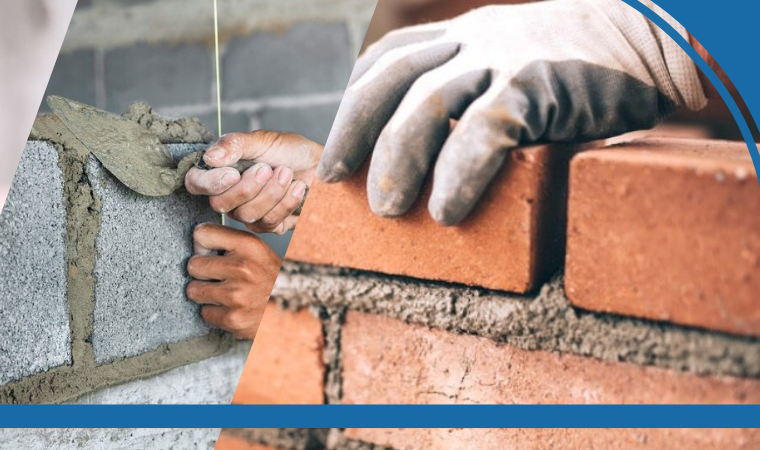
The construction industry has increasingly adopted AAC blocks due to their lightweight properties and thermal insulation benefits. However, AAC blocks require a specialized bonding material known as AAC block jointing mortar.
Traditional cement mortar has been used for decades in masonry construction. But with modern building practices evolving, many builders now prefer AAC block jointing mortar for improved efficiency and performance.
This article explores the differences between AAC block jointing mortar and traditional cement mortar.
What is AAC Block Jointing Mortar?
AAC block jointing mortar is a ready-to-use dry mortar designed specifically for joining AAC blocks. It is composed of cement, sand, and specialized additives that enhance bonding strength.
The mortar forms thin joints between AAC blocks, improving structural performance.
Advantages of AAC Block Jointing Mortar
Strong Bonding
AAC block jointing mortar provides excellent bonding strength between blocks, ensuring structural stability.
Thin Joint Application
Unlike traditional mortar, AAC block jointing mortar requires only a thin layer of application.
Faster Construction
Because of its quick application and strong bonding, AAC block jointing mortar speeds up the construction process.
Reduced Material Consumption
Thin joints mean less mortar consumption, reducing material costs.
Traditional Cement Mortar
Traditional cement mortar is a mixture of cement, sand, and water. It has been widely used for masonry work for many years.
However, traditional mortar requires thicker joints and longer curing time.
Limitations of Traditional Mortar
- Higher material consumption
- Longer curing time
- Increased risk of cracks
- Uneven bonding in AAC blocks
These limitations have encouraged builders to adopt modern mortar solutions.
Block Jointing Mortar for Modern Construction
Block jointing mortar is not limited to AAC blocks. It is also used for various masonry applications where strong bonding and efficiency are required.
It helps achieve:
- uniform construction
- reduced shrinkage cracks
- improved structural durability
Role of Ready Mix Plaster in Construction
After masonry work is completed, plastering is necessary to achieve smooth wall surfaces. Many builders now use ready mix plaster instead of traditional plaster.
Ready mix plaster is a pre-mixed dry mortar that requires only water before application.
Benefits of Ready Mix Plaster
- consistent quality
- faster application
- reduced labor cost
- improved surface finishing
Many readymix plaster manufacturers are producing advanced plaster formulations to meet modern construction requirements.
Spray Plaster for Walls
Another modern plastering technique is spray plaster for walls.
Spray plaster uses mechanical spraying equipment to apply plaster quickly and evenly across large surfaces.
This method is ideal for large residential and commercial projects.
Water Resistant Plaster
Buildings often face issues related to moisture and dampness. Using water resistant plaster helps protect walls from water penetration and environmental damage.
Water resistant plaster improves the durability of buildings and prevents structural damage caused by moisture.
Conclusion
AAC block jointing mortar offers significant advantages over traditional cement mortar. It provides stronger bonding, faster construction, and reduced material consumption.
Combined with materials such as block jointing mortar, ready mix plaster, spray plaster for walls, and water resistant plaster, modern construction projects can achieve better efficiency and durability.
As construction technology continues to evolve, advanced materials like AAC block jointing mortar will play an increasingly important role in building strong and sustainable structures.