
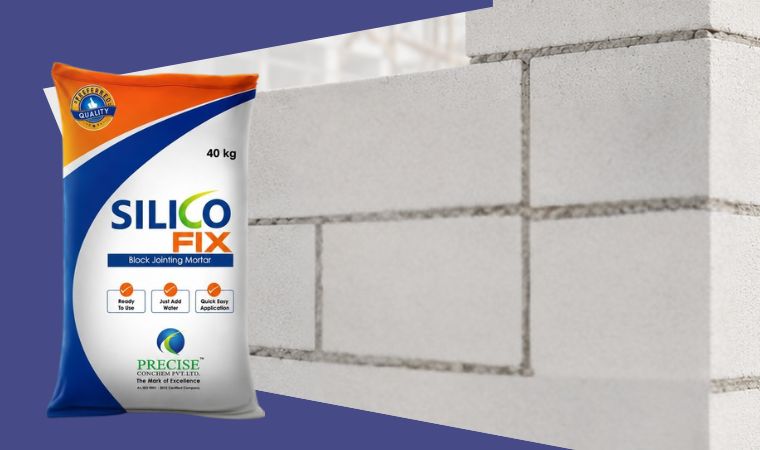
The construction industry has evolved significantly with the introduction of advanced building materials that improve speed, quality, and durability. One such innovation is AAC Block Jointing Mortar, a specially designed dry mix mortar developed for laying Autoclaved Aerated Concrete (AAC) blocks. Unlike traditional cement mortar, AAC Block Jointing Mortar is manufactured in controlled conditions using high-quality cement, graded sand, polymers, and performance-enhancing additives to deliver consistent strength and superior bonding.
As modern projects demand lightweight construction, improved thermal insulation, and faster execution, High-performance Block Joint Mortar has become the preferred choice for builders, contractors, architects, and developers. It not only provides exceptional bonding but also reduces material wastage, minimizes shrinkage cracks, and enhances the overall structural performance of masonry walls.
In this guide, you’ll learn everything about AAC Block Jointing Mortar, including its formulation, benefits, coverage, consumption, applications, pricing, and why it is a better alternative to conventional cement mortar.
AAC Block Jointing Mortar is a factory-made Polymer Modified Mortar specially formulated for joining AAC blocks using thin joints of approximately 3–5 mm. It offers stronger adhesion, lower material consumption, faster application, better crack resistance, and improved durability than conventional cement mortar, making it the ideal choice for modern construction projects.
What is AAC Block Jointing Mortar?
AAC Block Jointing Mortar is a ready-to-use dry mix adhesive specifically designed for fixing AAC blocks, lightweight concrete blocks, and fly ash bricks. Instead of manually mixing cement and sand at the construction site, this mortar is supplied in a pre-mixed form. Workers simply add the recommended quantity of clean water to prepare a smooth and workable mix.
The mortar is applied in a thin layer, usually between 3 mm and 5 mm, which creates a strong bond between blocks while reducing the amount of material required. Because of its advanced polymer technology, the mortar provides excellent adhesion, minimizes joint thickness, and improves the structural stability of masonry walls.
Compared to traditional cement mortar, AAC Block Jointing Mortar delivers a cleaner finish, reduces construction time, and improves the overall quality of the project.
AAC Block Jointing Mortar Formulation
The performance of AAC Block Jointing Mortar Formulation depends on the careful selection of premium raw materials. Every ingredient plays an important role in ensuring consistent quality, easy application, and long-lasting durability.
A standard formulation generally includes:
- High-grade Ordinary Portland Cement (OPC)
- Washed and graded silica sand
- Polymer modifiers for enhanced bonding
- Water-retaining agents for improved workability
- Performance additives to reduce shrinkage
- Chemical binders for better adhesion
- Workability enhancers for smooth application
This balanced formulation creates a High-performance Block Joint Mortar that offers superior strength, crack resistance, and excellent bonding with AAC blocks. Since the product is manufactured in controlled factory conditions, every bag maintains consistent quality, unlike site-mixed cement mortar.
Benefits of High-performance Block Joint Mortar
Superior Bonding Strength
One of the biggest advantages of AAC Block Jointing Mortar is its exceptional bonding strength. The polymer-enriched formulation creates a strong and durable connection between AAC blocks, reducing the possibility of joint failure and improving the stability of masonry walls. Strong bonding also enhances the overall lifespan of the structure.
Lower Block Jointing Mortar Consumption
Traditional cement mortar is generally applied in thick layers, leading to high material consumption. In contrast, Block Jointing Mortar Consumption is significantly lower because it is applied in thin joints of only 3–5 mm. This reduces wastage, lowers transportation costs, and improves overall project efficiency.
Better Crack Resistance
Shrinkage cracks are common in conventional masonry work. Thanks to its advanced polymer additives, AAC Block Jointing Mortar minimizes shrinkage during curing, reducing the chances of cracks and ensuring a smoother, stronger wall finish.
Faster Construction
Being a ready-to-use product, AAC Block Jointing Mortar eliminates the need for measuring and mixing cement and sand at the construction site. Workers simply add water and begin application, helping projects progress faster while maintaining consistent quality.
Excellent Workability
The mortar has a smooth and creamy consistency, making it easy to spread using a notched trowel. This improves block alignment, ensures uniform joint thickness, and enhances the overall finish of the masonry work.
Improved Thermal Efficiency
AAC blocks are known for their thermal insulation properties. Thin mortar joints reduce thermal bridging, allowing walls to retain their insulation performance and contribute to better energy efficiency inside buildings.
Long-Term Durability
As a Polymer Modified Mortar, this product offers excellent resistance to moisture, weather changes, and ageing. The strong bond and durable formulation reduce maintenance requirements and extend the life of masonry structures.
Block Jointing Mortar Consumption & Coverage
One of the major reasons builders prefer AAC Block Jointing Mortar is its efficient material usage. Since the mortar is applied in thin joints, the overall Block Jointing Mortar Consumption is much lower than conventional mortar.
Typically, 3–5 kg of mortar is required per square metre of AAC block masonry, depending on block size, workmanship, and joint thickness.
When applied correctly, a 40 kg bag generally provides AAC Block Jointing Mortar Coverage of approximately 8–10 square metres. Proper surface preparation and accurate application help maximise coverage and minimise wastage.
AAC Block Jointing Mortar Price
The AAC Block Jointing Mortar Price depends on several factors, including product quality, polymer content, packaging size, order quantity, and project location.
Although the initial Block Jointing Mortar Price may be slightly higher than traditional cement mortar, it offers significant long-term savings through reduced labour, lower material consumption, faster construction, and minimal maintenance. This makes it a cost-effective solution for both residential and commercial construction projects.
Applications of AAC Block Jointing Mortar
AAC Block Jointing Mortar is suitable for a wide range of construction projects, including:
- Residential homes and apartments
- Commercial buildings and office complexes
- Hospitals and healthcare facilities
- Schools and educational institutions
- Industrial buildings and warehouses
- Hotels and hospitality projects
- Shopping malls and retail spaces
- Lightweight block masonry
- Fly ash brick construction
- Interior and exterior partition walls
Its high bonding strength and reliable performance make it an ideal choice for modern masonry work.
AAC Block Jointing Mortar vs Traditional Cement Mortar
Feature | AAC Block Jointing Mortar | Traditional Cement Mortar |
Joint Thickness | 3–5 mm | 10–15 mm |
Bonding Strength | High | Moderate |
Material Consumption | Low | High |
Crack Resistance | Excellent | Moderate |
Construction Speed | Fast | Slower |
Wastage | Minimal | Higher |
Workability | Excellent | Depends on manual mixing |
Overall Performance | Consistent | Variable |
Best Practices for Application
To achieve the best performance:
- Ensure the AAC block surface is clean and free from dust.
- Mix the mortar only with the recommended amount of clean water.
- Allow the mixture to rest for a few minutes before application.
- Apply the mortar evenly using a notched trowel.
- Maintain a uniform joint thickness of 3–5 mm.
- Avoid adding extra water after mixing.
- Protect newly constructed walls from excessive rain or direct sunlight during the initial curing period.
FAQ's
-
What is AAC Block Jointing Mortar?
AAC Block Jointing Mortar is a ready-to-use polymer modified mortar specially designed for laying AAC blocks with superior bonding and thin joints.
-
What is the average Block Jointing Mortar Consumption?
Typically, 3–5 kg per square metre depending on block size and application method.
-
What is AAC Block Jointing Mortar Coverage?
A 40 kg bag generally covers around 8–10 square metres of AAC block masonry.
-
Is AAC Block Jointing Mortar better than cement mortar?
Yes. It offers stronger bonding, lower material consumption, faster application, improved crack resistance, and better durability.
-
Why is Polymer Modified Mortar recommended for AAC blocks?
Polymer Modified Mortar improves adhesion, flexibility, water retention, and long-term structural performance compared to ordinary cement mortar.
Conclusion
Choosing the right mortar is essential for achieving durable, efficient, and high-quality masonry work. AAC Block Jointing Mortar provides a modern solution with superior bonding strength, reduced Block Jointing Mortar Consumption, excellent AAC Block Jointing Mortar Coverage, and long-lasting durability. Its advanced AAC Block Jointing Mortar Formulation ensures consistent performance while reducing construction time and overall project costs.
At Precise Conchem, we manufacture high-quality High-performance Block Joint Mortar and advanced Construction Chemicals designed to meet the evolving needs of the construction industry. Whether you are building residential, commercial, or industrial projects, our products deliver reliable performance, enhanced efficiency, and long-term value.