
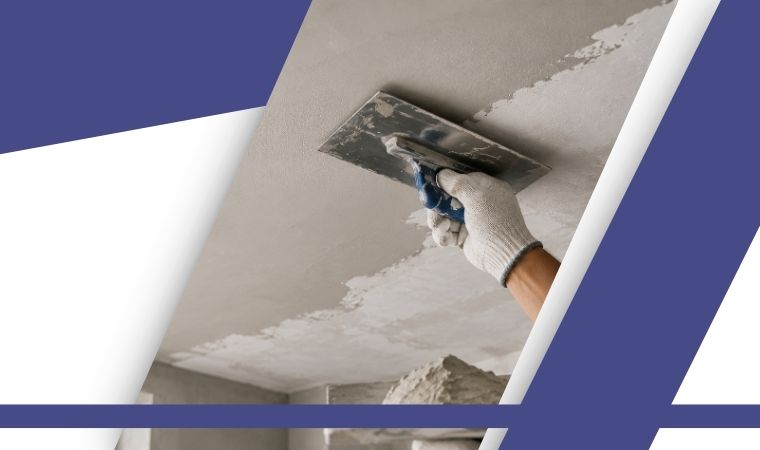
A strong and durable ceiling begins with the right plastering material and the correct Ceiling Plaster Ratio. Poor plaster proportions, improper mixing, or low-quality materials can lead to cracks, uneven finishes, hollow patches, and costly repairs. Since ceilings are constantly exposed to gravity and environmental changes, they require a plaster that offers excellent bonding strength, workability, and long-term durability.
Traditionally, contractors prepared plaster by manually mixing cement and sand on-site. While this method has been widely used, maintaining a consistent Ceiling Plaster Ratio is often difficult. Variations in material quality, inaccurate measurements, and workmanship can affect the strength and finish of the plaster.
Today, builders increasingly prefer Ready Mix Plaster and Ready Made Plaster, as these factory-manufactured products are produced with accurately measured ingredients. Their balanced composition ensures consistent quality, better adhesion, and a smooth finish while reducing material wastage and construction time.
In this guide, we’ll explain the importance of the Ceiling Plaster Ratio, the benefits of polymer-modified plaster, and best practices for achieving crack-free ceilings.
Quick Answer
The ideal Ceiling Plaster Ratio depends on the plastering material used. Traditional cement plaster generally follows a cement-to-sand ratio such as 1:3 or 1:4, while modern Ready Mix Plaster is factory-formulated with precisely balanced ingredients, eliminating the need for manual proportioning and ensuring consistent performance.
Why is the Ceiling Plaster Ratio Important?
The Ceiling Plaster Ratio directly influences the strength, adhesion, workability, and durability of the finished ceiling. If the ratio contains too much cement, the plaster may shrink and crack. If there is excessive sand, the plaster may lose strength and fail to bond properly with the concrete surface.
Maintaining the correct ratio provides several advantages:
- Strong adhesion to concrete ceilings
- Reduced shrinkage and cracking
- Uniform thickness throughout the surface
- Better finishing quality
- Longer service life
- Lower maintenance costs
Using factory-produced Ready Mix Plaster removes the uncertainty associated with manual mixing and ensures consistent results across every project.
Traditional Ceiling Plaster vs Ready Mix Plaster
In conventional construction, plaster is prepared by mixing cement, sand, and water on-site. Although experienced workers can produce acceptable results, quality often varies due to inconsistent materials and mixing methods.
By comparison, Ready Mix Plaster is manufactured in controlled conditions using premium cement, graded sand, polymers, and performance additives. Contractors only need to add the recommended amount of clean water before application.
Feature | Ready Mix Plaster | Traditional Cement Plaster |
Mixing | Factory-controlled | Site mixing |
Ceiling Plaster Ratio | Pre-balanced | Depends on workmanship |
Bonding Strength | Excellent | Moderate |
Surface Finish | Smooth | May vary |
Crack Resistance | High | Moderate |
Material Wastage | Low | Higher |
Construction Speed | Faster | Slower |
Ready Made Plaster: A Better Choice for Ceiling Applications
Ready Made Plaster has become increasingly popular because it simplifies the plastering process while delivering consistent quality. Since all ingredients are accurately measured during manufacturing, there is no need to calculate the Ceiling Plaster Ratio on-site.
Some of the key advantages include:
Consistent Quality
Every batch is manufactured under strict quality control, ensuring reliable performance and uniform strength.
Better Bonding
Polymer additives improve adhesion to concrete ceilings, reducing the risk of plaster detachment.
Smooth Finish
The fine particle size and balanced formulation create an even surface that requires less finishing work before painting.
Reduced Labour
Workers spend less time preparing materials, increasing productivity and reducing project timelines.
Cement-based Plaster for Durable Ceilings
A high-quality Cement-based Plaster provides excellent strength and durability for ceiling applications. It forms a strong base for paint and decorative finishes while resisting normal wear and environmental changes.
Modern cement-based plasters are often enhanced with polymers to improve flexibility, reduce shrinkage, and provide better resistance to cracks.
Water-resistant Plaster for Moisture Protection
Ceilings in kitchens, bathrooms, utility rooms, and basements are exposed to higher moisture levels. Using Water-resistant Plaster helps reduce water absorption and protects the ceiling from damp patches, peeling paint, and fungal growth.
Its key benefits include:
- Better resistance to humidity
- Reduced water seepage
- Longer-lasting surface finish
- Lower maintenance requirements
- Improved indoor appearance
Best Polymerized Plaster for Interior Use
The Best Polymerized Plaster for Interior Use combines the strength of cement with advanced polymer technology. These polymers increase adhesion, improve flexibility, and minimise shrinkage, making the plaster ideal for ceiling applications.
Compared with conventional plaster, polymerized plaster offers:
- Superior crack resistance
- Improved bonding strength
- Better workability
- Smooth and uniform finish
- Enhanced durability
This makes it an excellent choice for residential, commercial, and institutional buildings.
Best Practices for Ceiling Plaster Application
Following proper application methods is just as important as choosing the right plaster.
For the best results:
- Clean the ceiling thoroughly before plastering.
- Remove loose particles, dust, oil, and grease.
- Mix the plaster according to the manufacturer’s instructions.
- Do not add extra water after mixing.
- Apply the plaster evenly to maintain a consistent thickness.
- Use proper finishing tools for a smooth surface.
- Follow recommended curing practices where required.
These practices help maximise bonding strength and reduce the chances of cracks or delamination.
Applications of Ceiling Plaster
High-quality Ceiling Plaster for Construction Use is suitable for:
- Residential apartments and villas
- Commercial office buildings
- Hotels and hospitality projects
- Hospitals and healthcare facilities
- Educational institutions
- Shopping malls
- Industrial buildings
- Interior renovation projects
- New construction developments
Its versatility makes it an essential material for modern construction.
FAQ's
-
What is the ideal Ceiling Plaster Ratio?
Traditional plaster commonly uses a cement-to-sand ratio such as 1:3 or 1:4. However, Ready Mix Plaster is factory-formulated, eliminating the need to manually calculate the ratio.
-
Why is Ready Mix Plaster better for ceilings?
Ready Mix Plaster provides consistent quality, better bonding, smoother finishes, and improved crack resistance while reducing labour and material wastage.
-
Can Cement-based Plaster be used for interior ceilings?
Yes. High-quality cement-based plaster is widely used for ceiling applications due to its strength and durability.
-
Is Water-resistant Plaster necessary?
Water-resistant plaster is highly recommended for kitchens, bathrooms, and other moisture-prone areas to improve durability and reduce maintenance.
-
Which plaster is best for crack-free ceilings?
Polymer-modified Ready Made Plaster is one of the best choices because it offers superior adhesion, flexibility, and shrinkage control.
Conclusion
Maintaining the correct Ceiling Plaster Ratio is essential for creating strong, smooth, and long-lasting ceilings. While traditional plastering methods rely heavily on workmanship and accurate mixing, modern Ready Mix Plaster and Ready Made Plaster eliminate these challenges through factory-controlled formulations. Their consistent quality, superior bonding, and excellent crack resistance make them the preferred choice for today’s construction industry.
At Precise Conchem, we provide high-performance Cement-based Plaster, Water-resistant Plaster, and advanced plastering solutions designed to deliver durable, high-quality finishes for residential, commercial, and industrial projects. By choosing the right plaster products, builders can improve construction efficiency, reduce maintenance, and achieve long-lasting ceiling performance.